
Patios & Paving in Coventry
Almost every failed patio fails for the same two reasons: not enough sub-base, and slabs bedded on five blobs of mortar instead of a full bed. Get those right and the rest is choosing a slab.
- Coventry-wide
- Fully insured
- Free fixed quotes
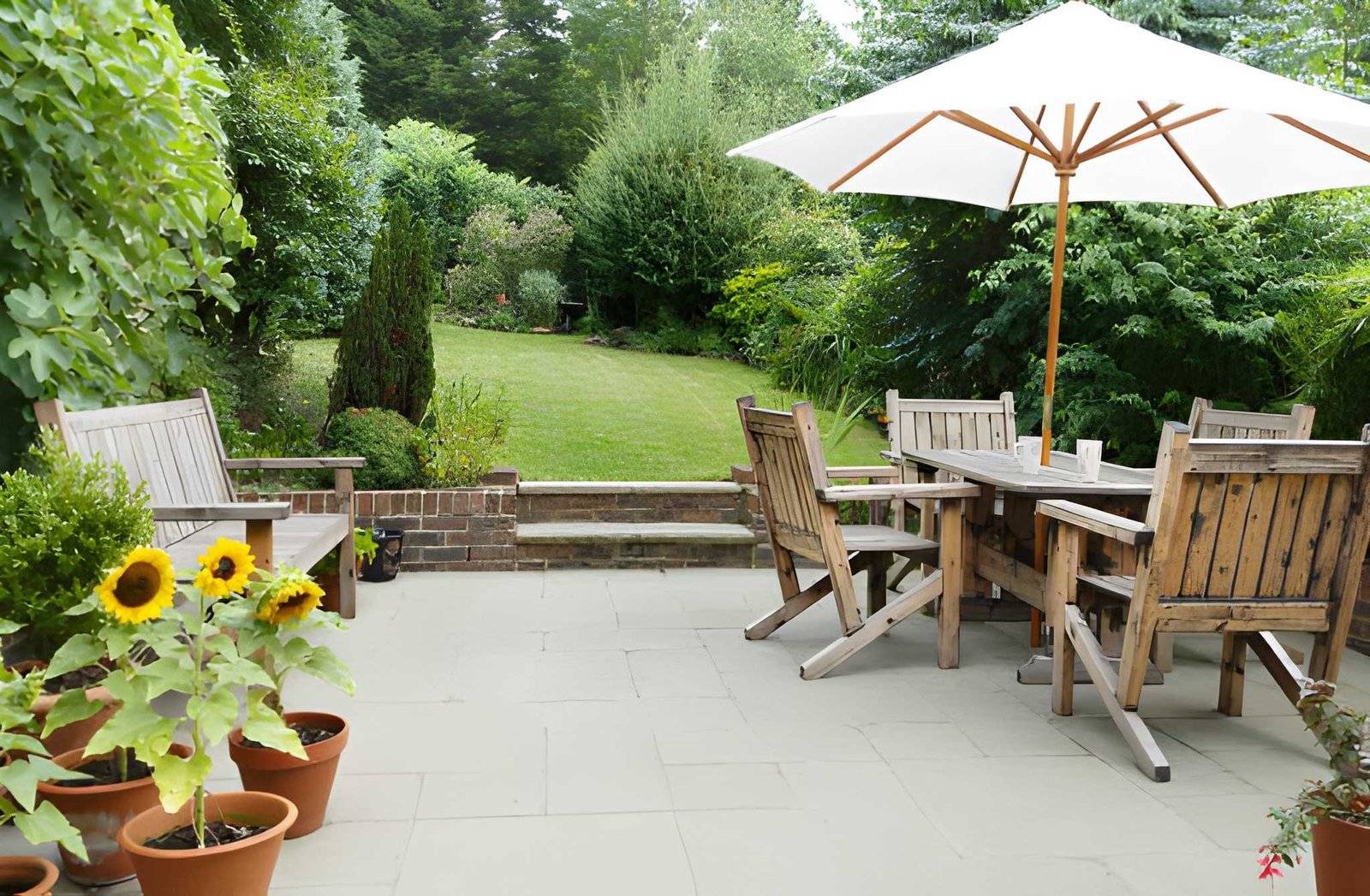
A patio in Coventry is built up from a compacted sub-base, usually 100 to 150mm of MOT Type 1, with slabs laid on a full mortar bed rather than spot-bedded on dabs. It is laid to a fall of around 1:80 away from the house and kept at least 150mm below the damp-proof course. Jointing is brushed or slurry-grouted depending on the slab, and porcelain needs its backs priming before laying.
- Spot bedding on five dabs of mortar is the single commonest cause of rocking, cracked and stained slabs.
- The patio must finish at least 150mm below the damp-proof course, or you have built a bridge for damp.
- A fall of about 1:80 away from the house keeps water off the wall and out of the doors.
- Porcelain needs a slurry primer on the back of each slab, or it simply will not bond.
- The sub-base is the part nobody sees and the part that decides whether the patio lasts.
The work itself, in plain terms
Excavation & sub-base
Dug out to the right depth and a compacted MOT Type 1 sub-base laid in layers - not a scrape of sand over the old lawn.
Full-bed laying
Every slab on a full mortar bed, primed where the material requires it, so there are no voids to hold water and no rocking.
Falls & drainage
Set out to fall away from the building, with a channel drain or linear gully where doors or levels demand it.
DPC clearance
Finished level kept below the damp-proof course. Raising a patio over the DPC is the quickest way to create a damp problem indoors.
Porcelain, sandstone & concrete
Indian sandstone, porcelain, limestone and concrete flags, cut and laid with consistent joints and proper edge detail.
Jointing & finishing
Brush-in or slurry jointing to suit the slab, plus steps, edging and the junction with lawn or borders.
Built around how you own the property
Homeowners
A patio that stays flat, drains properly and does not lift or stain after the first winter.
Extension projects
New paving set out to the right level against new bifolds or French doors, with the threshold drainage handled.
Landlords
Low-maintenance outdoor space that will not become a trip hazard or a complaint.
The jobs that start with a phone call
- 01
Slabs that rock underfoot, because they were spot bedded and the voids have collapsed.
- 02
White staining and dark patches coming through the slabs, usually from voids holding water under them.
- 03
A patio laid level or falling towards the house, so water sits against the wall and comes under the door.
- 04
Paving built up above the damp-proof course, with damp now showing on the inside of that wall.
- 05
Porcelain lifting in sheets because it was laid without priming the backs.
- 06
Weeds and moss in the joints within a season, because the jointing material was never suited to the gaps.
Chosen for the site, not just the brochure
Material choice is about more than looks: porcelain is dimensionally consistent and low maintenance but needs priming and careful cutting, sandstone is forgiving and warm but more porous, and concrete flags are the most economical. Shade, slope and how much traffic the area takes all matter.
- Porcelain paving
- Indian sandstone & limestone
- Concrete flags & setts
- Block paving & cobbles
- Steps, risers & edging
- Channel drains & linear gullies
Trusted across Coventry
Patios & Paving in Coventry — your questions answered
Still have a question? Our local team is happy to help — no pressure, no jargon.
Speak to us today0786 5778332Why do slabs come loose?
Nearly always spot bedding - the slab is laid on five dabs of mortar with voids between them. Water collects in the voids, freezes, and the slab rocks, cracks or stains from below. A full mortar bed under every slab costs a little more in materials and solves it permanently.
How deep does the sub-base need to be?
Usually 100 to 150mm of compacted MOT Type 1 for a domestic patio, more if the ground is soft or the area takes vehicles. It is laid and compacted in layers rather than tipped in one go. This is the part of the job that is invisible when finished and decisive in five years.
Can you lay a patio against my new bifold doors?
Yes, and the critical details are the finished level relative to the damp-proof course and the threshold, and the drainage. Usually that means a channel drain along the doors so water is taken away rather than pooling at the threshold. It needs designing, not improvising.
Is porcelain better than sandstone?
It is lower maintenance, more consistent in colour and thickness, and less porous, so it stays cleaner. Sandstone is warmer in tone, more forgiving to lay and usually cheaper. Porcelain costs more to buy and to cut, and must be primed. Both are good - it depends on budget and the look you want.
Will I need planning permission for a patio?
For a patio at or near ground level in a garden, normally not. Raised terraces and decking above a certain height can need permission, and a patio draining to the highway is treated differently. We will flag it if your project crosses one of those lines.
How long will the work take?
A typical domestic patio is usually within a week, depending on size, how much excavation and spoil there is, and the weather - mortar and jointing both need reasonable conditions. We would rather wait a day than joint a patio in the rain.
Get your patio priced in Coventry
Tell us roughly the size and what is there now - lawn, old slabs, concrete - and whether it is going against the house or out in the garden. We will come and look at the levels and the DPC.
- No obligation, no pressure, no hidden costs
- Qualified, insured Coventry tradespeople
- Fast response — within 24 hours on urgent jobs