
Brickwork & Repointing in Coventry
Pointing is sacrificial - it is meant to erode instead of the bricks. Repoint an old solid wall in hard cement and you reverse that, and the bricks start taking the damage instead.
- Coventry-wide
- Fully insured
- Free fixed quotes
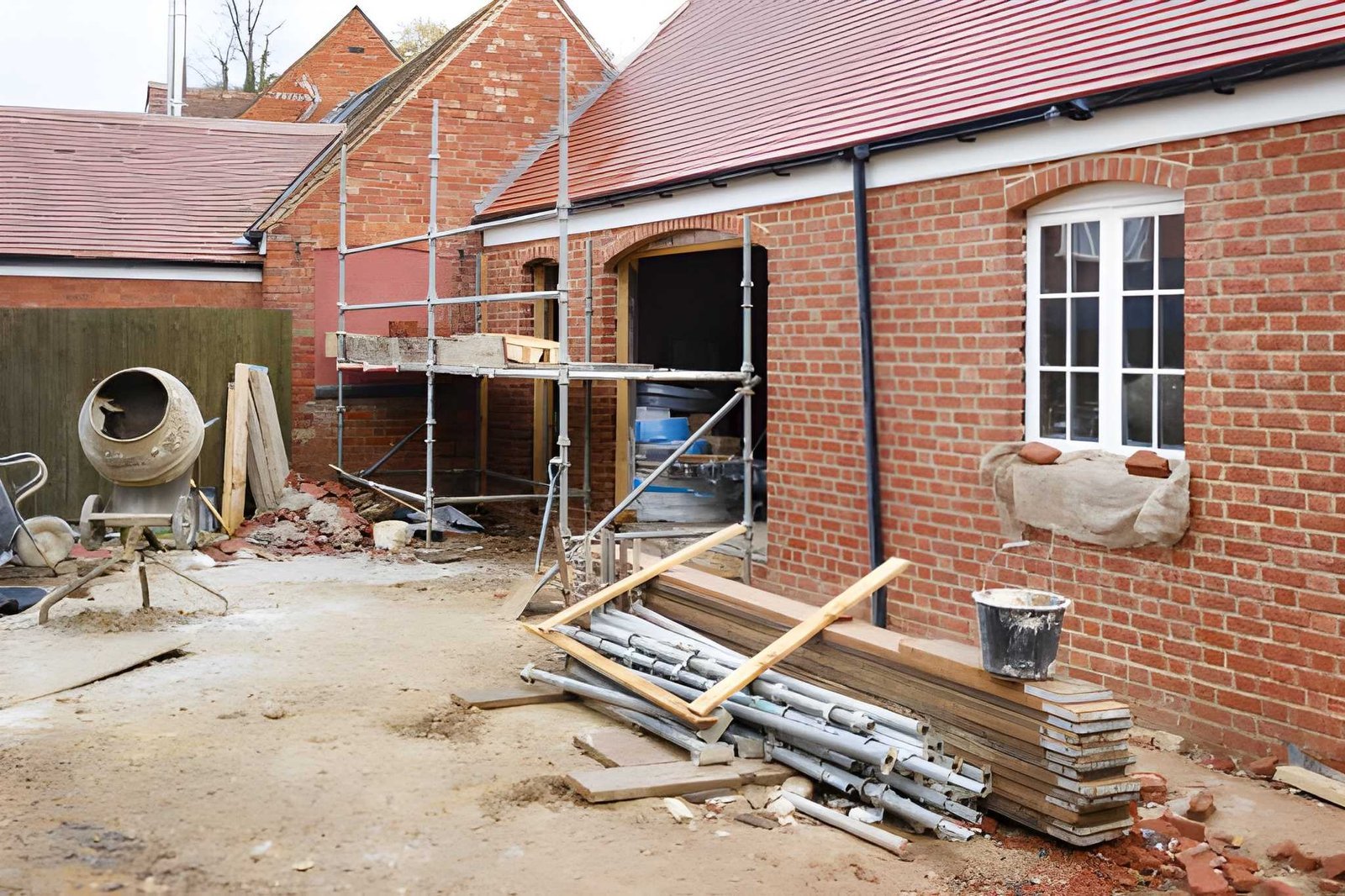
Brickwork and repointing in Coventry covers raking out and repointing eroded joints, replacing spalled and frost-damaged bricks, and rebuilding failed sections of wall. On older solid-wall properties the mortar needs to be softer and more permeable than the brick, which usually means a lime-based mix rather than cement. Joints are raked out to depth and the mortar and joint profile are matched to what is already there.
- Mortar should always be weaker than the brick, so it erodes instead of the brick face.
- Cement pointing on a soft Victorian brick wall traps moisture and causes the brick faces to blow.
- Joints must be raked out to roughly twice their width - smearing new mortar over old is pointless and falls out.
- The joint profile matters as much as the mix: a weather-struck joint sheds water, a flush one does not.
- Spalled bricks can usually be cut out and replaced individually, without rebuilding the wall.
The work itself, in plain terms
Repointing
Eroded, hollow and cracked joints raked out to proper depth and repointed in a mortar matched to the wall for strength, colour and profile.
Spalled brick replacement
Frost-damaged and blown bricks cut out individually and replaced with matched or reclaimed stock, so the repair does not read as a patch.
Lime mortar on solid walls
Older Coventry housing is largely solid-wall brick that needs a permeable lime-based mortar. Using the right mix is the difference between a repair and slow damage.
Crack repair & stitching
Cracked brickwork cut out and stitched, with the cause - movement, a failed lintel, tree roots, a washed-out footing - identified rather than just filled.
Rebuilding sections
Bay fronts, garden and boundary walls, parapets and gable ends rebuilt where repair is past the point of being sensible.
Making brickwork weathertight
Cills, copings, bed joints and the junctions where water actually gets into a wall, which is usually not the middle of it.
Built around how you own the property
Period property owners
Solid-wall brickwork repaired with the right mortar, which protects the house rather than quietly damaging it.
Landlords
Penetrating damp traced back to failed pointing and fixed at the outside wall, instead of being decorated over indoors.
Sellers & buyers
Pointing and brickwork flagged on a survey, put right properly and documented.
The jobs that start with a phone call
- 01
Joints you can rake out with a finger, with sand running out of the wall.
- 02
Brick faces that have blown off, leaving the soft inner core exposed to the weather.
- 03
Damp on an internal wall that follows heavy, wind-driven rain - penetrating through failed pointing, not rising.
- 04
A previous repoint in hard cement, now cracked away from the bricks and holding water behind it.
- 05
A stepped crack through the brickwork near a window or door, which is a lintel or movement problem, not a pointing one.
- 06
A repointed patch in grey cement across a wall of warm red brick, visible from the other side of the road.
Matched to the wall, not to the mixer
The right mortar depends on the age and construction of the wall. Coventry has a great deal of pre-1930s solid-wall brickwork that was built in lime and should be repaired in lime, alongside post-war cavity work where a cement-based mix is correct.
- Lime mortar for solid walls
- Cement-based mixes for cavity work
- Colour and aggregate matching
- Weather-struck & bucket-handle joints
- Flush & recessed finishes
- Reclaimed & matched brick stock
Trusted across Coventry
Brickwork & Repointing in Coventry — your questions answered
Still have a question? Our local team is happy to help — no pressure, no jargon.
Speak to us today0786 5778332How do I know if my house needs repointing?
Rake a joint with a screwdriver. If the mortar is soft, crumbles out or is recessed well behind the brick face, it has had it. Other signs are sand collecting at the base of the wall, damp appearing indoors after driving rain, and brick faces starting to blow.
Why does lime mortar matter on an old house?
A solid wall has no cavity, so it has to let moisture evaporate back out. Lime mortar is permeable and lets that happen through the joints. Hard cement seals the joints, so the moisture leaves through the bricks instead, and the brick faces spall off in the first hard frost.
Can you just point over the existing mortar?
No - and anyone offering to is wasting your money. New mortar needs a joint raked out to roughly twice its width to key into. Smeared over the top it has nothing to grip and will be falling out within a couple of winters.
Will the new pointing match?
That is the aim, and it is mostly about sand and aggregate rather than cement colour. We mix samples, let them dry - mortar changes colour as it cures - and show you before we point the whole wall. Fresh pointing always looks slightly new for a season or two.
Do I need scaffolding?
For anything above the ground floor, usually yes. Repointing is slow, two-handed work, and the quality of it drops immediately when somebody is doing it off a ladder. It is in the quote.
What about the crack in my wall - is that repointing?
Probably not. A stepped or diagonal crack is movement, and filling it without finding the cause just means it reopens. We will look at what is driving it - a failed lintel, a tree, a drainage problem, foundation movement - and tell you if it needs a structural engineer.
Get your brickwork priced in Coventry
Send a photo of the wall if you can, and tell us roughly how old the house is - that tells us a lot about what mortar it should be repaired in before we even arrive.
- No obligation, no pressure, no hidden costs
- Qualified, insured Coventry tradespeople
- Fast response — within 24 hours on urgent jobs